
Triparks 2007/08
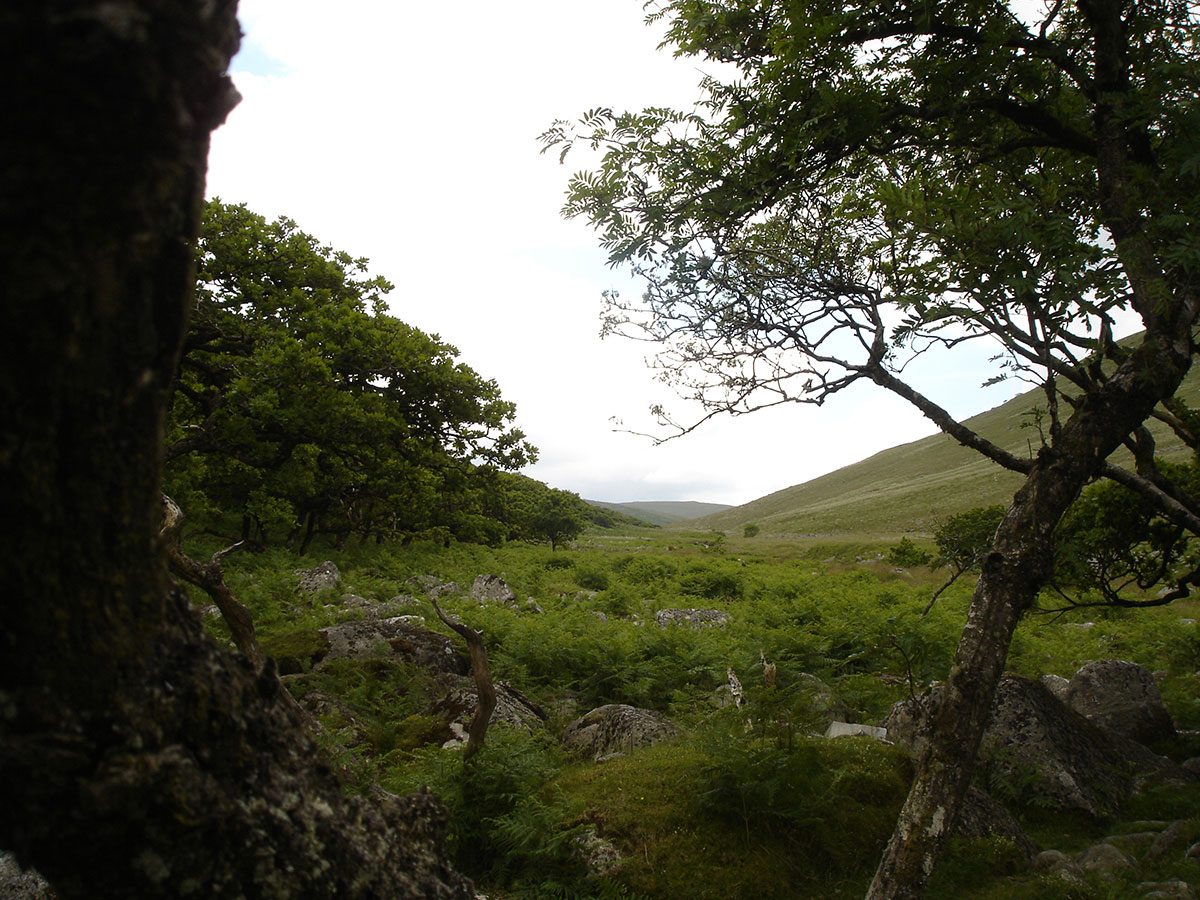
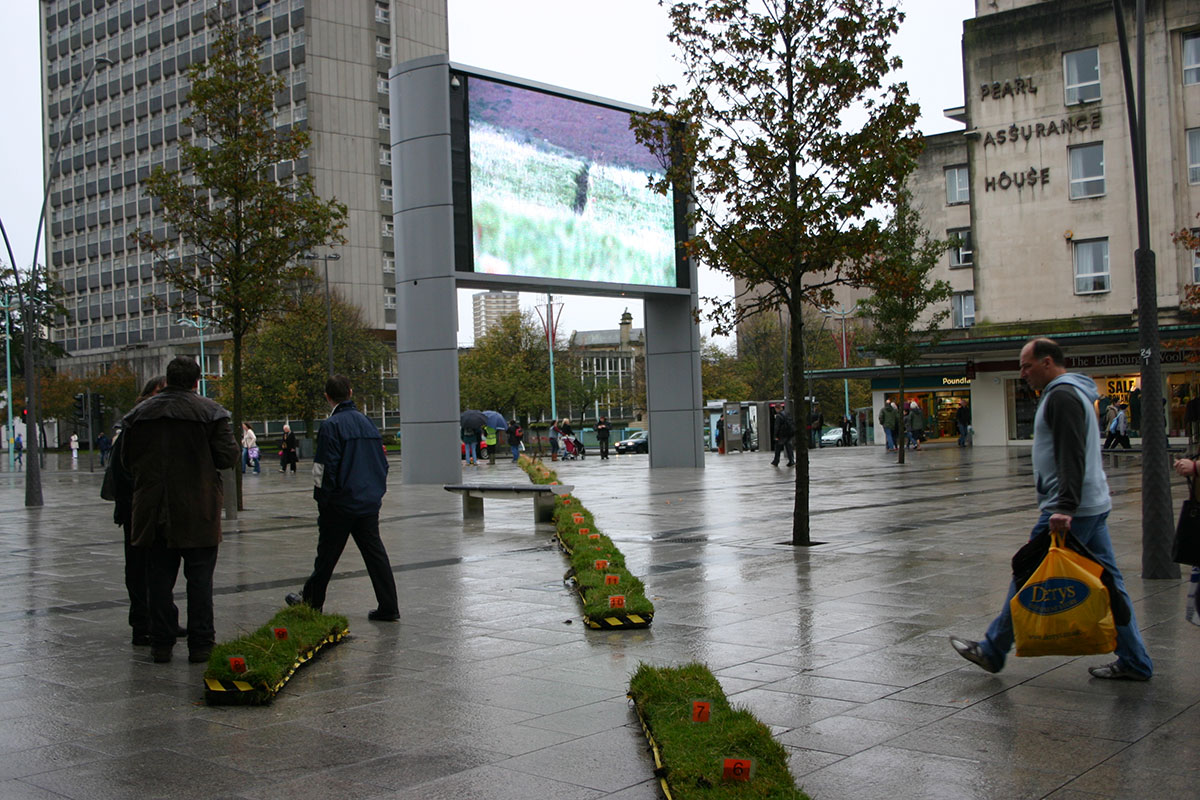
The Triparks residency on Dartmoor kickstarted my interest in the pragmatic and imaginative relationships between people and land in Britain. I shadowed the National Park Authorities and a commuting sheep farmer over the course of several months and spent many days and nights on the moor. Triparks introduced conversational research into my work and I honed in on three themes – how visitors to the moor perceive the scale of the landscape and the physical and imaginative freedom of movement it provides relative to its urban and rural catchment area. The politics and economies of land ownership as well as the historic relationships between Dartmoor as a landscape that has been shaped by human industry and external requirements for a long time.
I was one of six artists commissioned to work in one of three UK national parks – Dartmoor, Exmoor and Northumberland, to make work that “.. .explores people-place-time, and that provokes-relates-reveals.”
“Devon lanes tend to be flanked by impenetrable hedgerows and (from the car) much of the countrysite appears as a succession of disconnected cream tea hot spots, pristine vistas, and smallish circular walks. I feel that this fragmented “presentation” of landscape happens at the expense of the spontaneous encounters and explorations of the in-between. But it’s where people come from when they go up on the moor.” From the journal.
The main outcome of my residency was the Swinedown Walk, an intervention that connected a site near Hound Tor on Dartmoor with the centre of Plymouth for a day. Triparks was brought to Devon by Aune Head Arts.
The History of it – Mining Debris on Granit Boulder, 2008
|
|
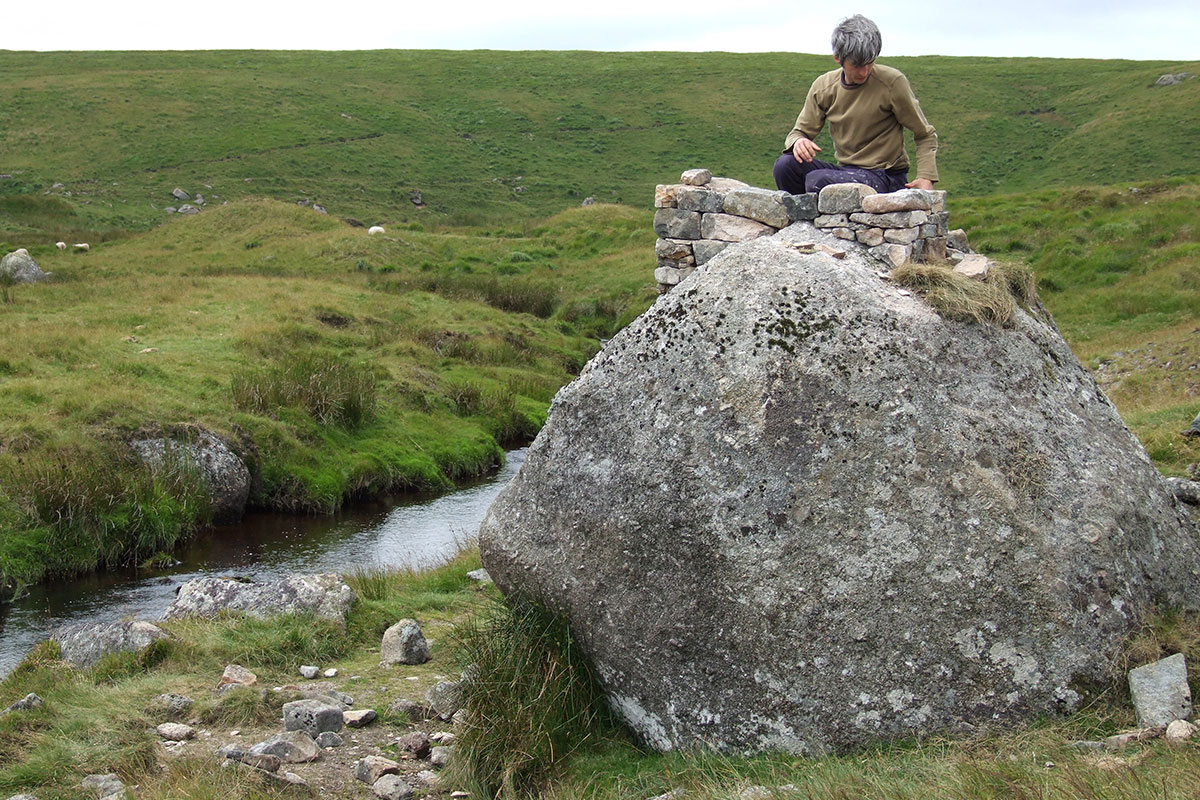
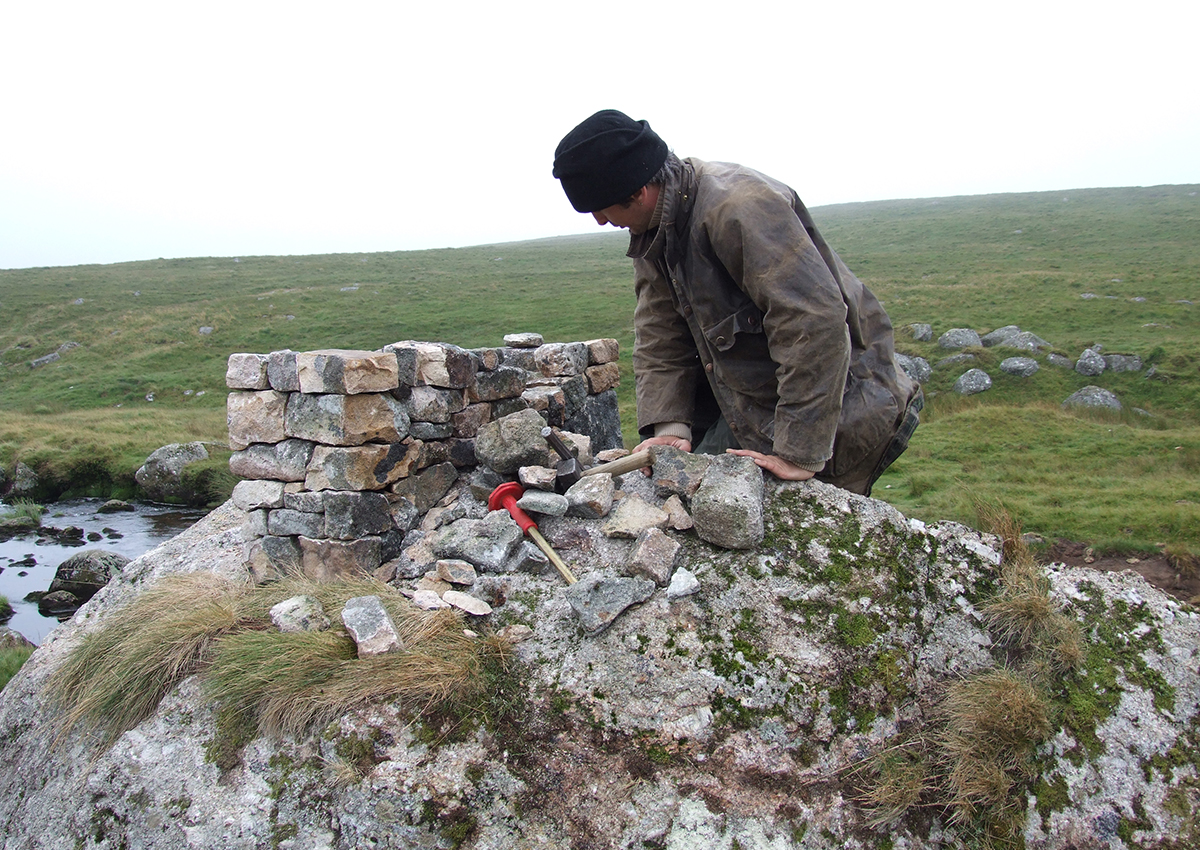


From Postbridge, Jay and I walk up the East Dart for about an hour before we see the granite boulder that is half buried to the south-east of Sandy Hole Pass. It crouches at a narrowing of the valley like a sentry, glowing in the morning sun. From the side it looks like the back of a large animal immersed in mud. Close by are the remains of tin miners’ huts and mysterious walls.
Normally I can build 2sqm of retaining wall a day. This is a lot slower. The idea is to erect a vertical free-standing wall onto the slope of the boulder without cutting a ledge for the bottom stone. I work four days over two weeks, picking individual stones from the pile of mining debris that is 40m downstream. Each way takes 2 minutes, 3-4 stones at a time. Selecting at a distance means memorising shapes over time –less intuitive and fluid. The rubble is small and must be laid accurately. Climbing on and off the boulder is time consuming, and crouching on it for hours hurts. From under the rubble, all sorts surface: plastic milk bottles, empty food cans, sweets wraps and lemonade bottles, the great outdoors garbage neatly tucked away from sight.
As I am about to lay the last three stones in driving rain, I slip and knock out the bottom wedge. The stucture stays suspended for a moment before most of it collapses. Jay stares in disbelief. We pack up and leave.
Date: 7th 15th 16th and 19th July 2008
Pseudo Giant (Scheinriese), Video Projection, DV PAL with 200x digital zoom 2008
|
|
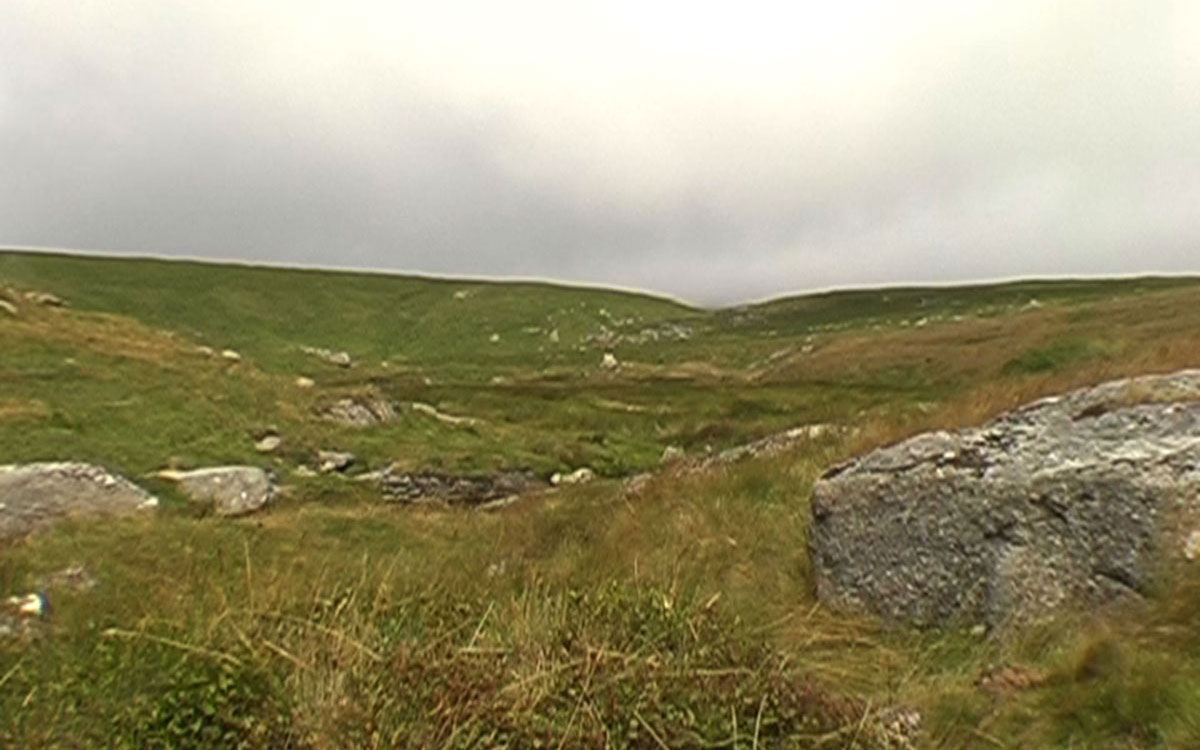
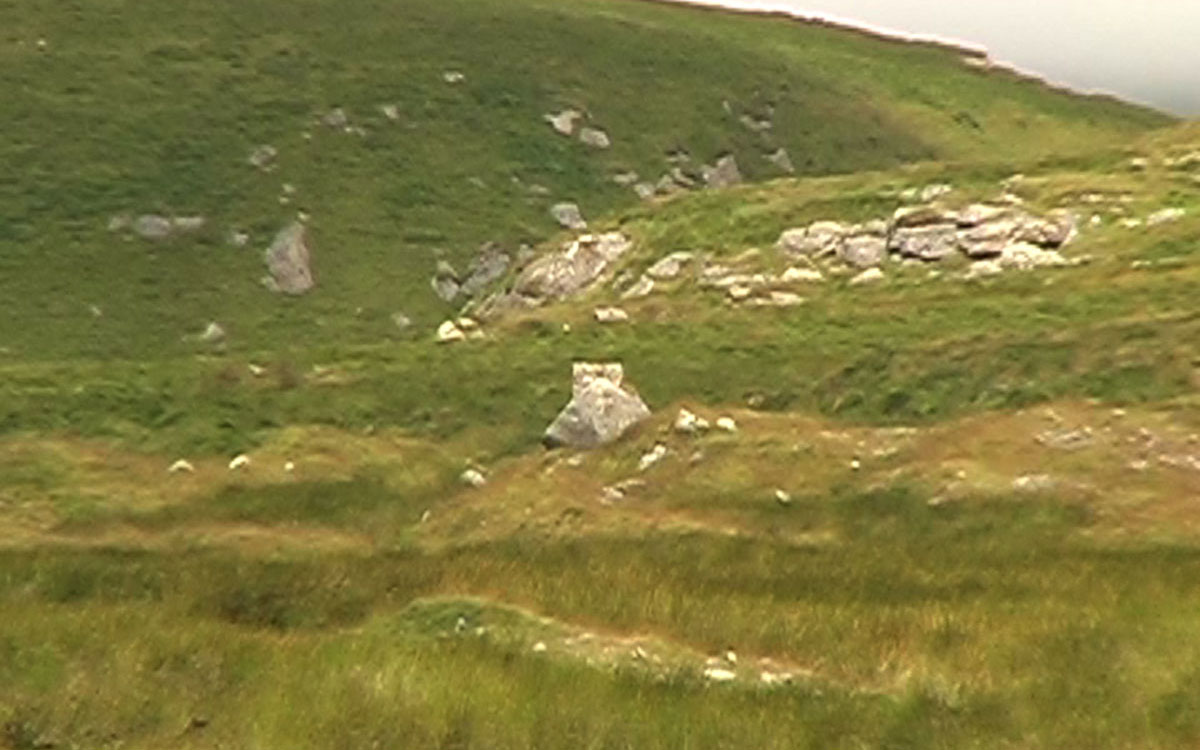
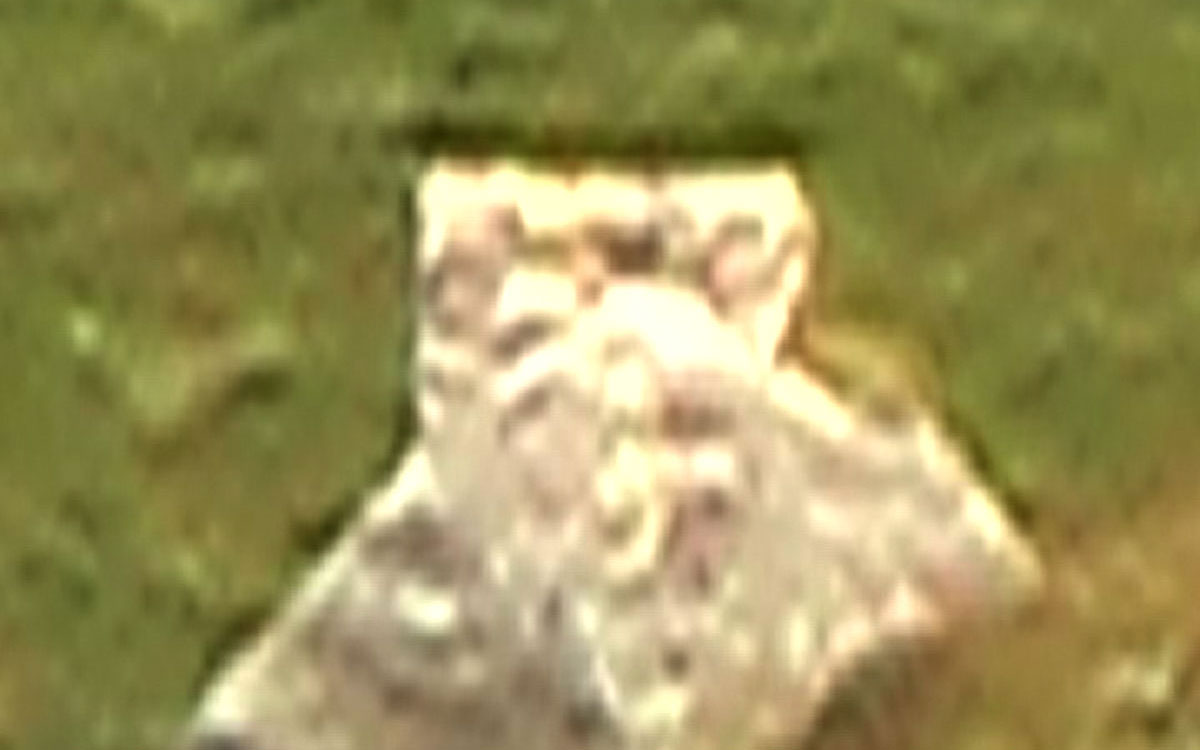
Without reference points, Dartmoor arguably appears much grander than it actually is. The video captures this ‘Dartmoor effect’ through a pulse of slow receding zooms. From a distance the dry stone wall structure appears the size of a house. It seems to shrink as we approach along the path, just like the tiny fairy tale creature Scheinriese, who appears bigger the further he gets away from us.